
Archives for posts with tag: jewish prayer

You can stop pretending. I know you don’t really care. But I’ll tell you anyway.

I’m closing in on a long-time goal.

I have the proof for the first of three books that will cover Jewish prayer for Shabbat (one book), festivals (another book) and weekdays (a third book). I’d like to think that, with the Rosh Hashanah and Yom Kippur books, this completes the cycle of Jewish prayer, all transliterated, all non-sexist, all egalitarian-friendly. All vegan and recyclable.

The books are pretty complete, with a lot of material that other books don’t bother to translate–though I know there’s always another obscure medieval acrostic or another prayer for long-gone Jewish leaders in Babylonia that one could revive because it’s traditional.

It’s all transliterated, side-by-side with the Hebrew and the translation.

It all follows the new standards: tell the congregation what to do (when and how to sit, stand, or respond); show people when prayers are quotations from Torah or from other parts of Hebrew scripture.

The fonts are more legible and more precise, too, with thanks to Microsoft for having made Unicode (fonts with every character in every language’s alphabet) part of their operating system for many years.

It’s going to be a big change. I’m planning that the Friday night and Shabbat morning books will be special orders only; the single-copy books will be the “complete” ones; and since they’ll be 300-450 pages, they’ll be hardbacks. They’ll cost more, but they’ll be worth more.

I showed someone the proof; how does it look? “It looks like all your other books.” I’m not sure whether to be disappointed. I want the page to help people as much as is possible in black and white, so I don’t want the changes to be jarring, but I hope they’ll be effective.

So that’s what I’ve been doing. I’m working on one of the final details, the poems we use to call up the honorees for Simchat Torah, but I thought that anyone who actually reads my blog might be interested in what’s forthcoming from the Singlish Publication Society, where we’re as miserable and guilt-ridden as we ought to be!
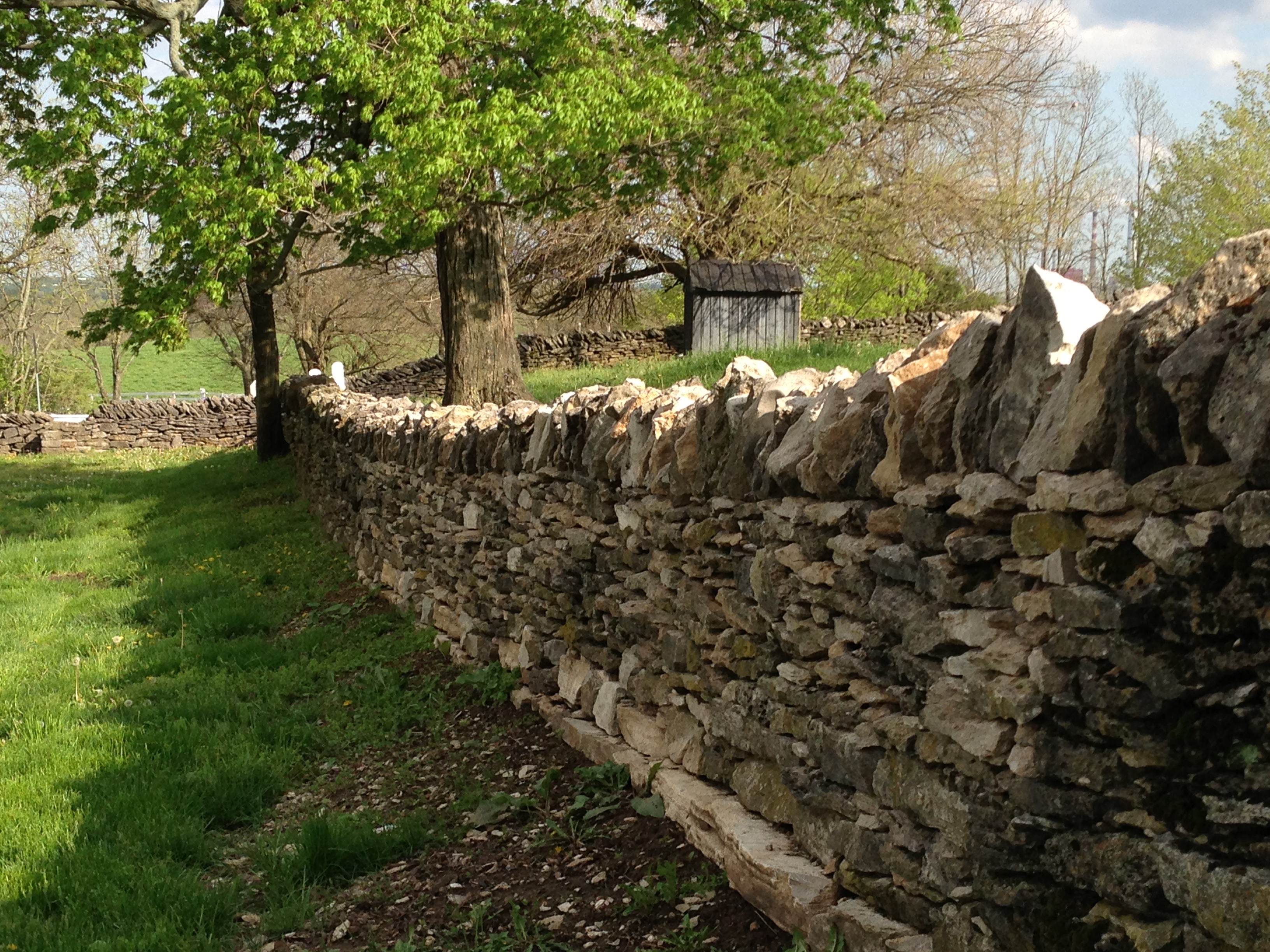
 

We spent a few days at Shaker Village in Pleasant Hill, Kentucky. Ah, the Shakers. Beauty in simplicity, like the superb craftsmanship of their furniture. A Shaker chair is lightweight and sturdy and upright, like a well-lived life. True, it’s a little rigid and uncomfortable; even a Shaker rocker cuts off circulation after an hour or two, but its clean lines and practicality are something to aspire to. You can even hang it out of the way on pegs installed around the wall.

But the Shakers are almost gone. Their communities were once a retreat from the dangerous world, with secure work and food and education in a caring community; today, Americans seem to prefer the pioneering thrill of an urban jungle or suburban wasteland. Is it a tragedy that the Shakers, or any religious community, should live only in a theme park dedicated to their memory?

A politician’s job is to get re-elected; an institution’s mission is to ensure its continuation. Can we seek no higher purpose than to perpetuate the status quo even if we sincerely wish to change it? Surely, if an institutionhas a true mission, its purpose is to make itself obsolete, irrelevant, unnecessary–and then to disappear.

I’m not keen on disappearing.

Every Jewish service ends with a quotation from Zechariah (14:9): “On that day will God be one.” What if that day arrives and people everywhere acknowledge the unity of God? If Judaism were to accomplish its mission to become a “light to the nations” (Isaiah 49:6), would anyone need Judaism?

Shaker dry stone wall

A dry stone wall, Shaker Village at Pleasant Hill.

There’s a story about a traveler who comes to a little town and sees a man sitting at the town gate. The traveler approaches, and the man seems to have no other business than to watch the world pass by. “Shalom aleichem,” says the traveler. “Aleichem shalom,” responds the man. “Vus macht a Yid?” says the traveler, a Yiddish combination of How’s it going and What are you doing. “You want to know what I’m doing?” says the man, “I’ll tell you. The community hires me to sit here every day and watch, to see if the Messiah comes. It’s not a bad job: it doesn’t pay all that well, but it’s steady work.”

Many of us are pretty sure that the world for which we pray will never arrive. If our prayers were to come true, could we handle success?

The Shakers are almost gone, but perhaps they achieved their mission. They created their own–as they sometimes saw it–heaven on earth. Their example shows that life need not be endless struggle, that a community dedicated to simple living can find security, satisfaction and beauty in work and worship.  Celibacy and rigid uprightness are not for everyone, but the

Shaker model has been adapted for other places and times and has much to teach humans everywhere. If these models for living should pass, let’s study their achievements and celebrate their success as much as we mourn their passing.

Today, dear friends, we have an unsettled disquisition on the assurance of reality.

“My rock, my redeemer.”

What do we mean when we call God a rock?

Reliable Rocks?

Surely a rock is the most reliable thing we can think of. We can lean on it, sit on it, stand on top of it to fight off our enemies, and hide behind it even when bullets and arrows are whizzing our way. The Psalmist speaks of taking refuge in craggy fastnesses, as David hid when pursued by King Saul: “God lifts me up on a rock / בְּצוּר יְרוֹמְמֵנִי /betzur yeromemeni” (Ps. 27:5).

But time, aided by wind and water, crushes massive rocks into dust. When the ancients contemplated ruins of earlier civilizations than their own, even they knew that a rock’s life is limited, and Shakespeare voiced this knowledge in Sonnet 55: “Not marble, nor the gilded monuments of princes / Shall outlive this powerful rhyme.”

Now that atoms have become divisible, our physicists can contemplate a new world of subatomic instability, a roiling sea of turbulence beneath the harsh facade of a concrete wall.

Oh, you rocks. Like humanity, you turn to dust.

Reality Rocks?

So here’s another thought. The 18th-century British philosopher George Berkeley held “that reality consists exclusively of minds and their ideas” (Stanford Encyclopedia of Philosophy online). Dr. Johson (isn’t he everyone’s favorite figure in English literature?) didn’t agree. Boswell wrote:

… we stood talking for some time together of Bishop Berkeley’s ingenious sophistry to prove the non-existence of matter, and that everything in the universe is merely ideal. I observed, that though we are satisfied his doctrine is not true, it is impossible to refute it. I never shall forget the alacrity with which Johnson answered, striking his foot with mighty force against a large stone, till he rebounded from it,–“I refute it thus.”

There we have it. When we call God a rock, we can say that God is the proof that matter matters, that existence exists, that you (dear reader) are not a figment of my imagination nor I of yours, but that we each possess a measure of reality. Ice cream is real, so let’s celebrate. When we say (in Aleinu, quoting Deut. 4:39) “Nothing else is /אֵ֖ין עֽוֹד / ein od,” we can understand this to mean that God is the source and proof of all existence.

Oh, the joy of these philosophical-theological-ontological-epistemological points! Though sometimes the joy is mitigated by an unsettling sense that the profound insight may in fact be a throwaway pun.

Or Does It?

I’d like to have seen the elderly Dr. Johnson (he was in his 50s), master of encyclopedic knowledge, stubbing his stubborn toe on a rock. Ho, ho, Berkeley is refuted, and who can ever argue with Dr. J.? And yet, and yet, you may feel something in your brain, but that doesn’t prove it’s real. What about those stories of amputees who have feeling in their severed limbs?

I shall take refuge in my rock, hoping it proves that I am right, and if you have a proof, dear reader, I hope you will share it.

One of my favorite projects in 2011 was a siddur for an overseas youth organization with members from different Jewish backgrounds. They wanted a prayer book that would satisfy the needs of their whole community, so (for example) we included both an Orthodox and a Reform amidah.

Truly, the differences in prayer are minor. I’ve never seen a Jewish prayer book of any denomination that lacked beautiful words to inspire us in our daily struggles. Still, the differences between one group of Jews and another loom large, as they always have: my mother was a Litvak, my father a Polack; a couple of generations before their romance, their union would have been unthinkable.

When I was a child, our family went to the Orthodox shul. I didn’t know anyone in the Reform shul and could barely imagine what kind of people went there, or why. For people more observant than we, my Booba had an epithet: Meshugga frum. I grew up thinking we were right, and the rest were either bordering on heathenism or just plain nuts.

Oh, how easy it is for a child to view those outside his own little group with a mixture of suspicion and scorn, and how hard it is to grow out of the arrogant ignorance of immaturity.

That’s why I think of that little siddur with satisfaction and with hope. If we can weaken the barriers that separate one Jewish person from another and instead strengthen the bonds that bind us, surely we can bring honor to God and benefit to humanity.